MLK – Remember by moving forward

January is a good time to practice holding contradictions and paradox. We’re past the darkest day of the year, and yet in for some of the coldest weather. We’ve just had New Year’s, with its promise of a fresh start mixed with the regret of things left undone in the last year. This January, I watched with joy a dear friend and her girlfriend show off their engagement rings. I prayed for another dear friend coping with a friend’s sudden death. I am thinking about so many people happy for the chance to connect with friends during the holiday but also struggling to get through another holiday without a parent.

As we commemorate Martin Luther King, Jr. Day today, I think about the paradox of venerating those heroes willing to die to speak truth to power without venerating the violence of their deaths. (That’s been a hard one for folks who follow Jesus to figure out.) I think about truly honoring how far we’ve come, without glossing over how far we have to go. I think about the importance of this holiday to honor Dr. King, but also the danger of reducing the movement of which he was a part to one charismatic person. That encourages us to wait for the next “Great Leader” to take care of things, when actually we’re being called to organize and to follow the model set for us. (Hmm, Jesus comes to mind again here.)

So remember (or learn about) MORE members of the ongoing civil rights movement. Know the stories of women like Ella Baker, Diane Nash, Fannie Lou Hamer, and Viola Liuzzo. Know the stories of those killed like Medgar Evers and David Schwimmer, and those who survived like Fred Shuttlesworth and Robert F. Williams. Know the story of Bayard Rustin.

And notice the stories going on all around us — stories about people who respond to hate with non-violence, who stand, trembling, against injustice — even when not directed at them, who make space for difference instead of fearing it.

The Adrinka symbol Sankofa is pretty well known anymore. Translated “go back and get it,” or “go back to fetch it,” it reminds us to hold the contradiction of looking back in order to move forward. Look back and remember, not as a place to stop, but as a beginning to stepping forward into the future. So let’s celebrate today not only by remembering, but also by moving forward!

Posted in Action, Holding Contradictions, Holidays, Musings on the News | Tagged , , , , , , , , , , , | 2 Comments

Riley on media literacy

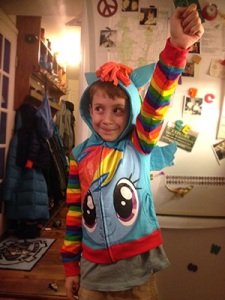
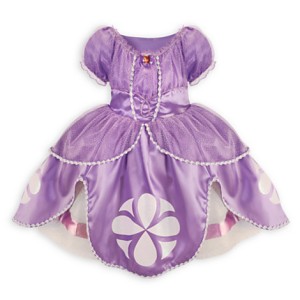
“Why do all the girls have to buy princesses?” Riley asks. “Some girls like superheroes; some girls like princesses; some boys like superheroes; some boys like princesses.”

Riley explains that, “They try to trick girls into buying the pink stuff,” though she’s not really clear on the why. (Maybe a little young for the breakdown on market segmentation, etc.)

Yes, it’s clear that she’s repeating what her parents have taught her. However, I’m unclear why some viewers find that negates her viewpoint or gives reason to vilify her parents. Lack of media literacy is widely considered a huge problem in our country. When I taught freshman composition on the college level a decade ago I was shocked by the lack of awareness the young adults in my class had toward advertising, and the messages of race, class, and gender embedded within them. From all accounts it’s only gotten worse – children in the US soak up advertising at a rate never imagined by past generations with little accompanying education in critical thinking about advertising.

From the University of Michigan Health System: According to a Kaiser Foundation study, kids spend the equivalent of a full-time workweek using media each week. As parents, we need to make sure our kids know how to “read” the media, so that they learn what we want them to learn from it, and don’t learn things we would consider to be the wrong messages. Knowing how to “read” messages in the media (including TV, movies, magazines, advertisements, computer and video games, popular music, and the Internet) is called media literacy. (follow the Univ. of MI link for lots of resources.)

PBS’s page on kids and media recommends pretty much exactly what Riley’s parents are doing — question the commercials, explain how your family’s purchases reflect your values, point out when ads promote stereotypes, speak out against aggressive advertising.

So yes, Riley was probably coached — and that’s exactly the kind of coaching all parents should be engaged in.

Links:
Current state of teaching media literacy in schools
Tips for starting media literacy with preschoolers (many educational efforts target middle-schoolers, which gives advertisers an 8-year head start!)
Campaign for a Commercial-free Childhood – these folks are unsung heroes, whose campaign against Disney’s false claims about Baby Einstein products got them evicted from their offices last year. Undeterred, they keep on speaking up.
New Media Literacies – blog, resources, and more from USC – Annenberg’s School for Communication and Journalism
transmediakids – Lots of links – ties into the dilemma of preparing our kids for the future’s tech integration (elementary students creating iPhone apps) without becoming uncritical about technology and media.

Posted in Uncategorized | 3 Comments

Christmas 2011 – what’s in the (gender) boxes?

Our kids had a great Christmas. They were blessed with many gifts from loving relatives, most of which thrilled them. We always ask folks not to get items with military themes, or commercial characters. While we have a girl obsessed with princesses and brides, and a boy who loves to build and invent, we also try to remember that our girl also loves storytelling, dragons, and trucks, and our boy also loves pink, dresses, and princesses.

Some of our family and friends have more difficulty than others expanding the gender boxes. Our daughter did get dragons, and a highlight was the matching set of play swords and shields — one for each of them.

On the other hand, by noon on Christmas Day, my three year-old daughter had received:

  • a princess and prince magnetic dress-up set
  • a full bridal party Barbie set, complete with cake, presents, veiled bride, groom, bridesmaid, and flower girl
  • a poufy silver dress
  • a Cinderella ballerina doll
  • 2 elfin princess figurines
  • light-up Disney princess sneakers
  • a Disney princess castle

And our five year-old son had received:

  • 3 Transformers vehicles – I confess I’m not up on the names and details, but one is a Camaro with a plasma cannon, and one has a machine gun complete with ammo belt
  • a camouflage-patterned military Humvee, truck, and tank (the last of which is also a Transformer)
  • an Optimus Prime shirt
  • 2 knight figurines on horseback

And you know what? The kids loved all these presents, so what’s the problem?

Here’s the text from the Barbie set: Girls can play out the role of bride and bridal party with Barbie I Can Be a Bride Gift Set. Plus, with access to online content they can also create a digital destination, allowing them to further “try on” the role as well! Code inside each package unlocks career-themed content online.

Here is some of the description of one of the Transformers tank toys: So impressive a figure as to almost seem like some drunken dream born from excesses of fermented energon, the Voyager Class Bludgeon marks the upgrade of the Deluxe Class version into a Japanese Type 90 with a robot mode based upon the Pretender shell of the Gen 1 Bludgeon; constructed to resemble a depraved skeletal samurai with malevolent red eyes. The stories of Bludgeon’s indiscriminate carnage have reached venerable Autobot Ironhide, prompting the latter to seek out the former.

Just because my daughter’s strongest future goal at the moment does seem to be planning a wedding, is it wrong for me to want to steer her away from thinking of getting married as a career option? I actually think the way Transformers convert from vehicles to figures is really cool and inventive; is it wrong for me to think there’s a problem with an entire series that has no other plot or purpose than unending battle?

It all connects to that ongoing question — how do we honor who our kids are, without limiting who they can be?

Posted in Gender complexity, Holidays, Toys | Tagged , , , , , , , , , , | Leave a comment

In a recent post on Slate.com, KJ Dell’Antonia says rather than making her think about

breast cancer, the October NFL practice of including pink accessories makes her rejoice in a brief break-out of the gender box.

Posted in Uncategorized | 1 Comment

Get your meanings off my son

I spent the summer reflecting on the way our society rushes to meaning — our political dialogues are pre-constructed with two or three possible narratives and it often seems our only choice is to pick which one to espouse. We have no interest in nuance; we’re uncomfortable with paradox; and forget ambiguity! US public discourse often takes the form of a forced-choice exercise. As George W. Bush  so famously said, “Either you are with us, or you are with the terrorists.”)

The same holds true in other arenas as well. In the US, we want to know not only that something has meaning, but exactly what that meaning is.

For those of you familiar with the Enneagram, I am a type 4. Among other qualities, we 4s are the most attuned to symbolism and meaning of all the types. As a folklorist, I see humans as animals who tell stories to make meaning of their lives and world. With both these identities, sometimes it is quite challenging for me to write a blog that frequently advocates delaying assigning meaning, at least when it comes to gendered behavior.

I have a young son who loves to build things, has a real set of tools, wants to be an inventor, tears up the neighborhood on his Big Wheel, and does most of these things in pink, glittery shirts or dresses and leggings. Don’t get me wrong — every parent of a kid who crosses our incredibly strict cultural boundaries about gendered behavior would like to know “what it means.”

It’s hard for us to hold a huge space of possibility open for our children — being queer, transgender, straight with uncommon interests and tastes — without knowing what piece(s) of that space they may someday occupy. It’s hard to advocate for them with family, friends, schools, and religious organizations — some of whom are informed, enthusiastic supporters, some of whom are well-meaning but needing some education, and some of whom are convinced that shaming or hatred are the solution — without being able to answer their question, “What does it mean?”

It is particularly frustrating to find our children pushed toward particular “meanings” by groups we think of as being like-minded. Trans advocates who think we parents are in denial and preventing our children from successfully transitioning. Feminists who think little girls in hoodies and soccer cleats have internalized sexist beliefs about the relative values of men and women.

Here’s the problem — we have a bad habit of starting with the meanings we care about and then looking for subjects to inhabit those meanings.  I always thought I would be an English professor until I took my first class in Literary Theory. In the class, we wrote every essay about the same novel, Wuthering Heights. One essay was from a Marxist perspective, one feminist, one Freudian, etc. It was fun play, and I was good at it. But I had always thought of literary theory as a tool to better understand a work of literature. I came to realize that modern literary theory uses written works as a tool to unpack, illuminate, or prove something about the theory itself. Literature’s complex, nuanced, elusive meanings are reduced to inhabiting the preset meanings of the theory at work.

This is what the sphere of public discourse does with conversations about gender as well. It is as if various groups have set up competing buckets at a carnival and they are all barking at me to throw my kid into theirs — “Over here! Over here! Boys in dresses should be encouraged to transition! Bring on the hormone blockers!” — “No, over here! Over here! Boys in dresses should be shamed back to normality! Uphold traditional gender roles!” — “Step right up! Over here! Why are you only talking about boys – what are you, anti-lesbian?”

Here’s the thing. My kid is not a tool. He’s a person  – complex, nuanced, only partially known, even to himself, sometimes contradictory.

We can know that his personality and his life are rich with meaning, even if we don’t know what those meanings are yet. What we need to know is that it is not OUR role to assign his meanings to him.

Posted in Gender complexity, Personal, The space between | Tagged , , , , , , , , | Leave a comment

Musings on the news, or Learning humility from the Queen

The Queen of England seems to have had a pretty successful trip to Ireland, the first of any British monarch to the island in the last hundred years. The visit was soaked with symbolism. She arrived wearing emerald green, and her very first stop was to lay a wreath at the Garden of Remembrance in Dublin, honoring those who died in the armed struggle for Irish independence from Great Britain in 1921. As Nicholas Witchell says, it was the subsequent bow of her head that meant the most:

“It was a bow of the head from the grand-daughter of the last King of Ireland which said that Britain fully accepts your country’s right to freedom, and respects those who set out to achieve it.”

Memorable moments filled her visit, including beginning a speech in Irish (stunning Irish president McAleese), visiting a Guinness brewery, and extending “deep sympathy” for things which, “with the benefit of historical hindsight . . . we would wish had been done differently or not at all.”

Queen Elizabeth’s visit worked because each of these gestures on her part had greater import. They said, I respect you and the symbols that are important to you, even if I don’t share them. They said, I acknowledge your right to freedom and I recognize your human dignity. They said, I am willing to give much thought to my words before speaking them.

Journalist Fintan O’Toole thinks the Irish people were most impressed by the Queen’s demeanor of humility and generosity, which shifted a longstanding dynamic of British acting superior and Irish responding to that superiority with defensive anger.

Boy, did that strike a chord! How often, especially when we don’t have lots of time to prepare, and staff to help us craft our remarks (and practice our pronunciation), do we relate to each other precisely in this superior “I’m in the right” manner?

In the May 17th issue of Christian Century, Peter Marty asks, “Have you noticed how love always takes a backseat when self-righteousness is behind the wheel?” He argues that when we are “convinced that God dislikes the exact same people and things [we] do,” we become “overconfident drivers” who will “mow down anything that gets in the way of [our] personal possession of the truth.”

Is it possible to come from a different place? To believe that rightness (or righteousness) come not from holding the correct belief, but from a correct way of relating to others? To take seriously the words from the 1960s hymn, “We will guard each one’s dignity and save each one’s pride?”

Posted in Uncategorized | Leave a comment

I would just like to say that it is my conviction

The other day I noticed a bargain bin at the bookstore and picked up the soundtrack to HAIR. The last time I had this album it was on a cassette tape, which I wore out listening to in the 1979 Ford LTD I inherited from my grandmother. I sing “Good Morning Starshine” when I wake the kids up in the morning, so I thought it would be cool to play it for them.

I think my partner has managed to be with me for eleven years without realizing that he’s involved with a HAIR freak. (I mean, who knows all the words to “Frank Mills”?!) I’ve been thinking about it, and I think I first saw this movie and heard this music at a very impressionable age and just adopted it as my personal philosophy of life. Beliefs like: people should be free to love whom they wish; stuff about race is complicated and tied up with our history in ways of which many white people are blithely ignorant; war sucks and hurts mostly innocent people; and a lot of “rules” about gender don’t make a whole lot of sense.

For example, here are the lyrics to the song, “My Conviction:”

I would just like to say that it is my conviction
That longer hair and other flamboyant affectations
Of appearance are nothing more
Than the male’s emergence from his drab camoflage
Into the gaudy plumage
Which is the birthright of his sex

There is a peculiar notion that elegant plumage
And fine feathers are not proper for the man
When actually
That is the way things are
In most species

Hmmm, yeah, that’s right. The most brightly colored birds? Boys. Peacocks? Boys. The lions that get to have big hair? The boys. Huh.

When I had my first child, who happened to be a boy, I did bring this philosophy to bear. I was not interested in trying to dress him as a girl. I was conscious about broadening his surroundings (from his clothes, to his carseat cover, to his bedroom decor) to include colors and images I thought of as sweet and beautiful for any baby, or as fun, or as whimsical. I was troubled by the underlying violence of many traditional boys’ designs. (I was also conscious that if we had another child who was a girl, which we did, I wanted to be able to reuse stuff.) I knew that pink is traditionally worn by girls, but to me, it’s just a color. It doesn’t have any intrinsic meaning, right?

I was startled by the strength of reactions about my son not being clearly enough marked as male. A cashier at the grocery store told me I would “damage his psyche, dressing him in pink.” I pretty quickly realized that people were embarrassed to have mistaken him for a girl — it is considered an insult in our culture to call a boy a girl, even by accident — and their embarrassment turned quickly to defensive anger. Slowly I started unpacking layers of gender role construction that go far beyond what is custom to what is mandated.

Looking back at images of my son as an infant and early toddler, I understand why strangers were often confused about him. He was born with an incredible amount of hair, which always made folks think he was a girl. (Somehow Mother Nature did not get the message that girl babies should be born with hair and boy babies should be bald.) A typical outfit might include a baseball shirt with pink and white striped leggings. Although in order to get any bright or pretty colors (not just pink, but yellow) I did usually have to shop across the aisle, I tried to find clothes that weren’t “marked” as feminine with bows, lace, puffed sleeves, or the like. (If you try this, you will realize that almost all little girls’ clothes are so marked, which starts to make you wonder if they’re specifically trying to keep the boys out of them.)

I started imagining a kind of toxic sea that we all swim in–an ocean of pink princesses being sexy at four; an ocean of fire-fighting, sword-wielding “#1s” whose only permitted emotion is anger. We mostly don’t talk about it, often don’t notice it, unless someone climbs out of the sea. Then worried bystanders start hissing, “Get back in the water!”

I would just like to say that it is my conviction
that the problem is the water, not the people
emerging from it. There is a peculiar notion that
boys who like poetry and beauty, and are taught
to feel love, empathy, and tenderness may
no longer want to put on camouflage and
go to war. And you know what?
That might just be true.

Posted in Uncategorized | 6 Comments